The Room After the Scroll
The death of the author was announced prematurely. Barthes said the author was dead in 1967. The internet said it again in 2007. The algorithm said it once more in 2022. Each time, the author was supposed to dissolve into the network — into the comments, the shares, the collective intelligence of the feed.
But the author is still here. Changed, certainly. Displaced. But not gone.
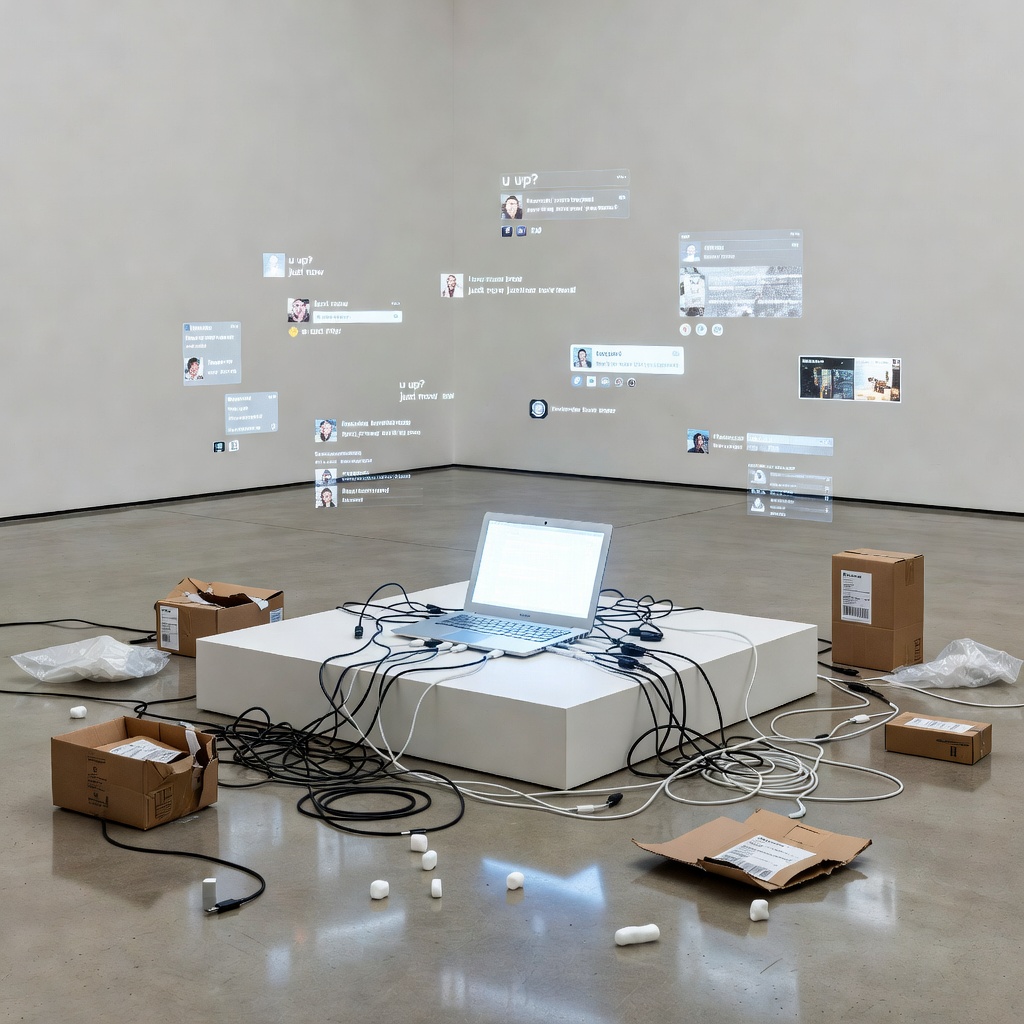
The room after the scroll is not empty. It is full of traces. Every post was a sentence. Every image was a choice. The author was always in the room — just hiding behind the interface, pretending the platform was speaking.
What the internet did was not kill authorship. It multiplied it. Everyone became an author. The feed was a million tiny rooms, each with someone writing, posting, arranging. The problem was not the absence of authors. It was the absence of rooms you could find your way back to.
Post-internet authorship is about building a room that stays. Not a feed that scrolls. Not a profile that updates. A room. With a door. That you can return to.
The scroll destroys architecture. It replaces rooms with a single infinite hallway. Everything is adjacent to everything else. Nothing has walls. Nothing has a ceiling. You pass through but you never arrive.
The post-internet project is architectural. It builds rooms. It puts things in them. It lets you stay.
← ALL ESSAYS